
Unarmed Security Guard Services
Most properties and facilities need a trained security presence without firearms. Unarmed security officers handle access control, property patrols, incident documentation, and visitor management — the day-to-day security work that keeps tenants, employees, and visitors safe. Aquila Private Security provides licensed, uniformed officers for apartments, office buildings, retail locations, construction sites, and commercial properties across California.
Request an Unarmed Security Quote for your property.
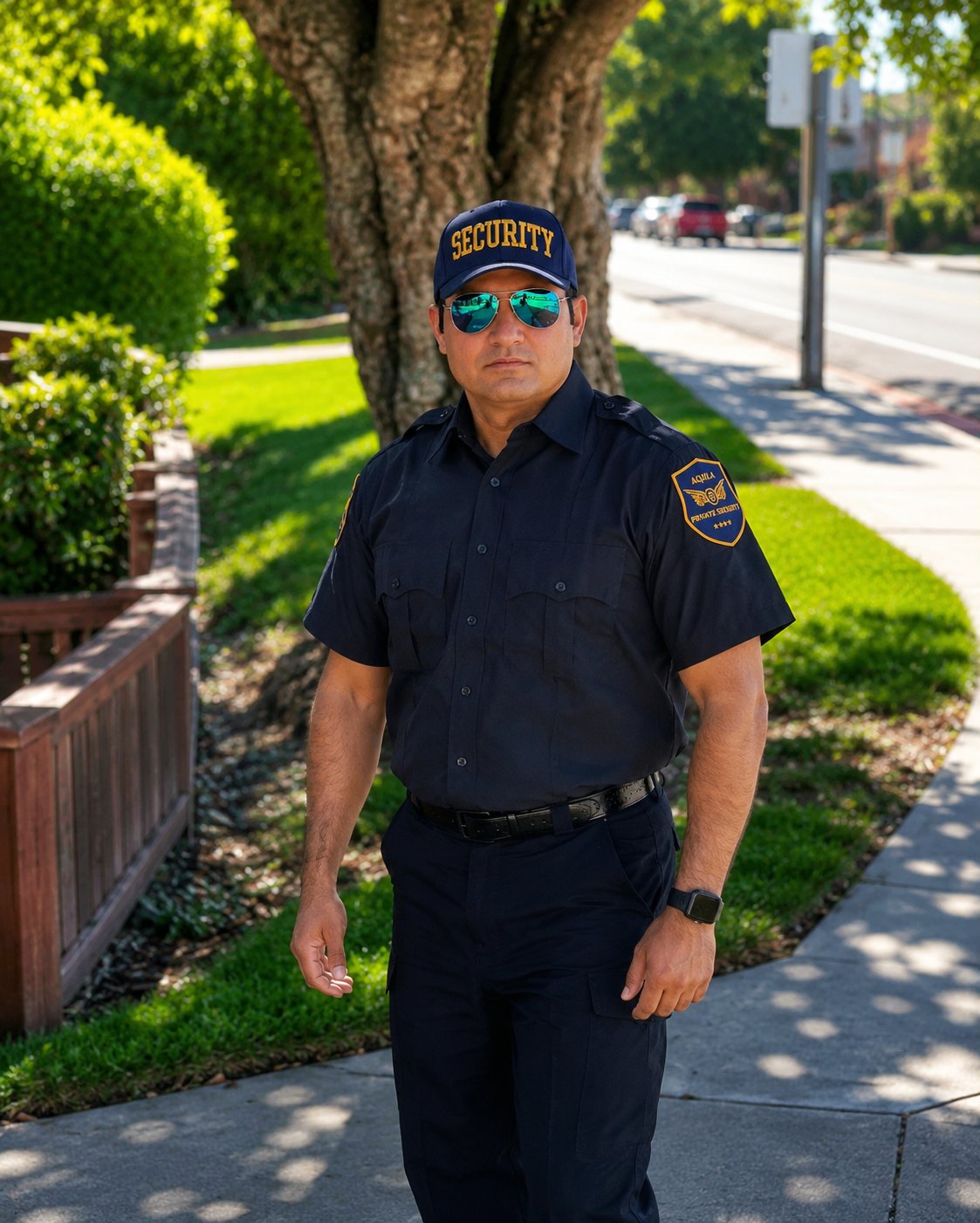
What Unarmed Security Officers Do
An unarmed security officer provides a visible, professional presence at your property. Officers are licensed through the California Bureau of Security and Investigative Services (BSIS), trained in conflict de-escalation, and equipped to handle the security situations that property managers and business owners deal with regularly.
Access monitoring. Officers verify visitor identity, enforce sign-in procedures, and manage entry points. In multi-tenant buildings, this includes coordinating floor-specific access policies under building management direction. Access control is often the single most effective measure for reducing unauthorized entry.
Lobby and front-desk presence. A uniformed officer at the front desk deters unauthorized access, greets tenants and visitors, accepts deliveries, and serves as the first point of contact for anyone entering the building. For properties that need a professional first impression — corporate offices, medical facilities, residential communities — lobby coverage is essential.
Foot patrols. Officers walk scheduled or randomized routes through hallways, stairwells, parking areas, and building perimeters. Patrol routes are designed around each property’s layout and risk profile. Regular foot traffic through common areas deters loitering, vandalism, and opportunistic theft.
Parking and common-area observation. Vehicle break-ins, unauthorized parking, and safety concerns in garages and lots are common complaints. Officers monitor parking areas, enforce assigned-space policies, and document violations. Common areas like pools, courtyards, and laundry rooms also benefit from regular observation.
Incident documentation. Every security event is recorded in a written report with timestamps, descriptions, and actions taken. Property managers and building owners receive these reports for insurance, legal, and tenant-communication purposes. Consistent documentation creates a record that protects both the property and its management.
Customer-service expectations. Security officers interact with tenants, visitors, vendors, and contractors throughout every shift. Aquila officers are trained to communicate professionally and represent the property’s standards — not just enforce rules. The goal is a security presence that residents and tenants view as helpful, not adversarial.
Properties and Industries That Benefit from Unarmed Security
Unarmed officers are the right fit for most commercial, residential, and institutional properties. Armed security is appropriate for high-risk environments, but the majority of security needs — access control, patrols, incident response, documentation — are handled effectively by trained unarmed personnel at lower cost and reduced liability.
Apartment communities and HOAs. Gate access, pool and amenity monitoring, noise complaints, parking enforcement, package theft prevention, and after-hours patrols. Residents expect security that is approachable and consistent.
Office buildings and corporate facilities. Lobby reception, visitor management, after-hours access control, and parking structure coverage. Multi-tenant buildings need officers who can coordinate different access policies across floors.
Retail stores and shopping centers. Shoplifting deterrence, customer safety, parking lot patrols, and incident documentation. Officers maintain a professional presence without creating an aggressive atmosphere.
Construction sites. After-hours material and equipment monitoring. Construction theft is a persistent problem — unarmed officers on scheduled or randomized patrol routes deter opportunistic theft without the liability of armed presence on an active job site.
Medical and dental offices. Patient check-in support, waiting room monitoring, and after-hours building security. Healthcare environments need officers trained in calm, professional interaction with patients and staff.
Warehouses and distribution centers. Loading dock monitoring, employee badge verification, vehicle access, and inventory area patrols. Officers document all entries and exits for loss-prevention records.
Site-Specific Post Orders and Training
Every property is different, and generic security instructions lead to generic results. Before an officer starts at your site, Aquila conducts a walkthrough to identify access points, camera blind spots, high-traffic areas, and recurring incident patterns. From that assessment, we build site-specific post orders — written instructions that tell each officer exactly what to do, when, and how at your property.
Post orders cover patrol routes and timing, access control procedures, visitor policies, emergency contacts, escalation protocols, and any property-specific rules. Officers are briefed on these orders before their first shift and carry them on site for reference. When your property’s needs change — a new tenant moves in, construction begins nearby, an incident pattern emerges — we update the post orders accordingly.
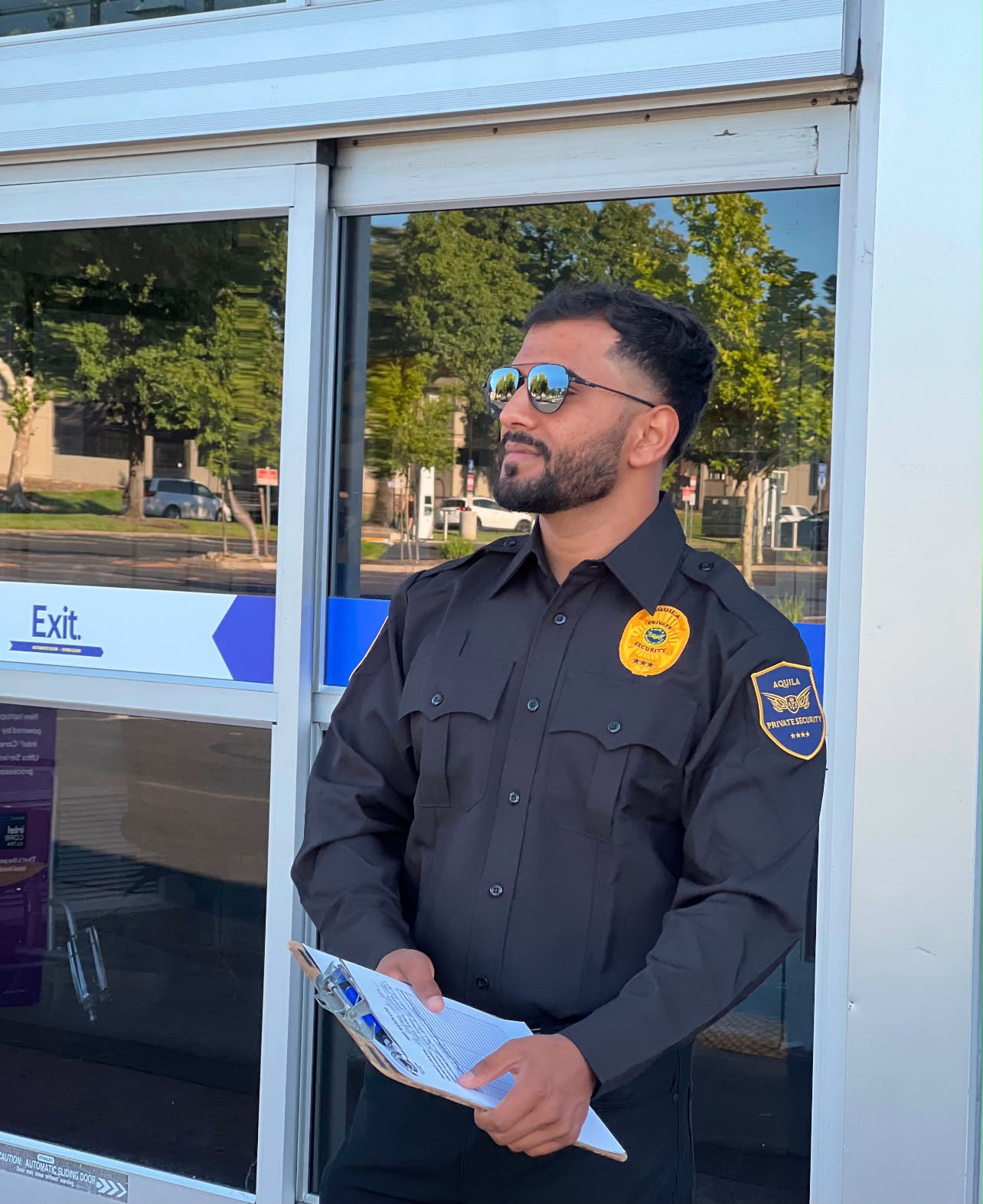
Escalation and Emergency Procedures
Unarmed security officers are trained to observe, report, and de-escalate — not to act as law enforcement. When a situation exceeds the scope of unarmed security, officers follow a defined escalation protocol:
Observation and documentation. Officers assess the situation and begin documenting details — descriptions, timestamps, actions observed. This information is critical for law enforcement and insurance purposes.
De-escalation. Officers are trained to calm confrontations through professional communication. Many incidents — trespassing, noise complaints, parking disputes, intoxicated individuals — can be resolved through verbal de-escalation without physical intervention.
Law enforcement contact. When a situation involves a crime in progress, a medical emergency, or a threat to safety, officers contact 911 and local law enforcement. They secure the area, direct people to safety, and provide responding officers with the documentation they have gathered.
Property management notification. Building managers and property owners are notified per the agreed escalation chain. Officers do not make decisions about tenant evictions, employee terminations, or legal action — those are management decisions supported by the officer’s documentation.
Unarmed Guards, Mobile Patrol, and Armed Security — What Is the Difference?
These three services address different security needs, and many properties use a combination. Understanding the differences helps you choose the right coverage for your situation.
Unarmed standing guards provide a continuous on-site presence. An officer is physically at your property for the entire shift — stationed at a lobby, walking patrol routes, or monitoring access points. This is the right choice when you need someone on the ground to handle real-time situations, interact with tenants and visitors, and maintain a consistent visible deterrent.
Mobile patrol covers your property with scheduled or randomized vehicle visits. A patrol officer arrives, inspects the property, documents conditions, and moves to the next site. Mobile patrol is cost-effective for properties that need periodic checks — overnight coverage, vacant buildings, construction sites — but do not require a full-time on-site officer.
Armed security is appropriate for high-risk environments — financial institutions, cannabis operations, high-value asset protection, and situations involving known threats. All armed officers carry valid California exposed-firearms permits. Armed coverage carries higher liability and cost, and most commercial and residential properties are better served by unarmed officers or a combination of unarmed and patrol coverage.
Not sure which combination fits your property? Request a security assessment and we will recommend the right coverage based on your risk profile and budget.
Why Property Managers Choose Aquila
BSIS licensed (PPO #121799). Aquila operates under an active California Bureau of Security and Investigative Services Private Patrol Operator license. Every officer carries a valid guard card.
Licensed and insured. We carry commercial general liability insurance and provide certificates of insurance to property owners and management companies on request.
Site-specific post orders. Officers follow written instructions tailored to your property — not a generic security template applied to every site.
Documented activity. Property managers receive incident reports and patrol logs. Every event is recorded with timestamps, descriptions, and actions taken.
Consistent personnel. We assign the same officers to recurring shifts whenever possible. Consistency builds familiarity with your property and improves service quality.
Flexible scheduling. Coverage can be adjusted by shift, day of week, or season. You are not locked into a fixed schedule — we build coverage around your property’s actual risk windows.
Professional communication. Officers are trained to interact with tenants, visitors, and executives in a way that matches your property’s professional standards.
Frequently Asked Questions
What does an unarmed security officer check during a shift?
Officers follow site-specific post orders that typically include patrol routes, access-point checks, perimeter inspections, parking area observation, and common-area walkthroughs. Every check is documented in a patrol log. If an incident occurs — unauthorized entry, a maintenance hazard, suspicious activity — the officer documents it in a separate incident report and follows the escalation procedures defined for your property.
Can an unarmed officer handle a physical confrontation?
Unarmed officers are trained in de-escalation and conflict resolution. Their role is to observe, report, and de-escalate — not to physically detain or pursue individuals. If a situation involves a direct physical threat, the officer secures the area, contacts law enforcement, and documents the incident. Security officers are not law enforcement and do not have arrest authority beyond what any private citizen has under California law.
How is unarmed security different from hiring a receptionist?
A receptionist handles administrative tasks. A security officer is BSIS-licensed, trained in de-escalation and emergency response, and responsible for access control, patrol, and incident documentation. Security officers also carry the legal authority and training to enforce property rules, manage trespassers, and coordinate with law enforcement when needed. Many properties use both roles — the receptionist handles tenant services while the officer handles security.
What reporting do property managers receive?
Property managers receive written incident reports for every event and regular patrol logs documenting officer routes, access checks, and observations. These reports are available for property owners, insurance claims, legal proceedings, and tenant communications. Reporting format and frequency can be customized to your management workflow.
Can I combine unarmed guards with mobile patrol?
Yes, and many properties do. A common arrangement is unarmed standing guards during business hours for access control and visitor management, with mobile patrol covering after-hours and overnight checks. This combination provides continuous coverage at a lower cost than 24/7 on-site staffing.
Do officers wear uniforms?
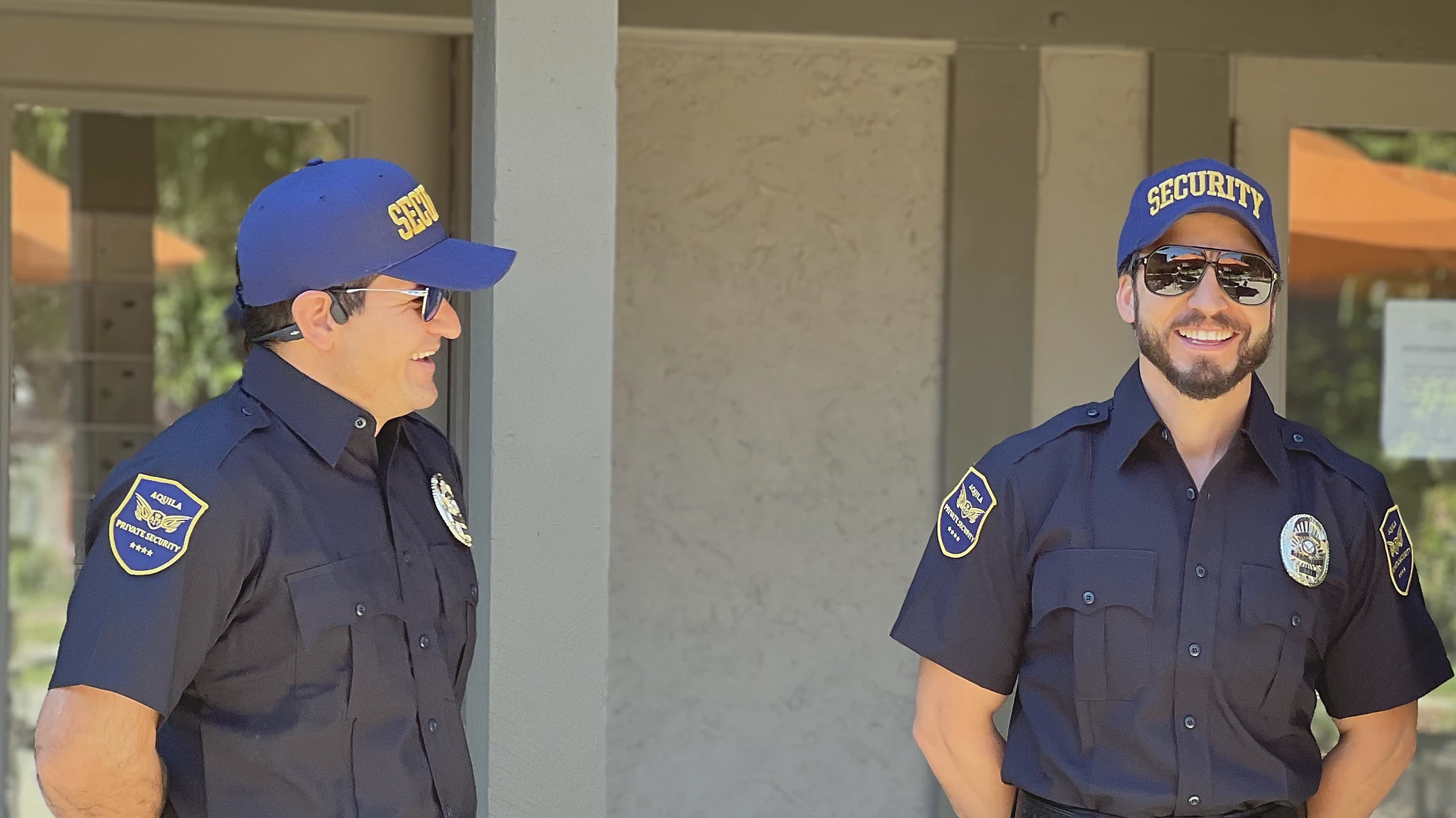
Yes. Aquila officers wear branded uniforms and carry a visible identification badge. Uniform style — dress shirt and slacks, tactical vest, or full uniform — can be adjusted based on the property’s environment and your preference. Marked vehicles are used for patrol services.
How is pricing determined?
Pricing depends on the number of officers, shift length, schedule (weekday, weekend, overnight), and any site-specific requirements. We provide a written quote after a walkthrough of your property. There are no hidden fees — what we quote is what you pay. Contact us for a detailed proposal.
Request an Unarmed Security Quote
The first step is a walkthrough of your property. We will assess your security needs, discuss coverage options, and provide a written quote tailored to your property and budget.
Request your free security quote or call us directly at (925) 699-3418.