Is It Legal To Buy Bpc 157 BPC-157 Cost 2026: Real Pricing Breakdown
Introduction
If you’re searching “is it legal to buy bpc 157,” you’re probably also trying to answer a more practical question: what will it actually cost you in 2026—and what are you buying when the price looks suspiciously low? In my hands-on work reviewing lab- and vendor-side documentation for peptide buyers, the biggest surprises weren’t the lab techniques—they were the inconsistencies in how sellers present sourcing, testing, shipping, and pricing. This guide breaks down BPC-157 cost in 2026 in a transparent way, so you can budget realistically and avoid common traps that lead to wasted spend.
BPC-157 Cost 2026: What “Price” Usually Includes (and What It Doesn’t)
When people compare BPC-157 cost, they often compare the headline number and ignore what that number implies. In the real world, your total cost typically spreads across multiple buckets.
1) Product unit cost (the headline price)
This is the per-vial or per-amount price shown by the vendor. But “amount” can be presented differently (for example, per vial size vs. per mg). In my experience auditing purchasing pages, the confusion usually comes from:
- Different vial sizes presented as “starter,” “standard,” or “bulk” without clear mg math.
- Labeling that’s accurate for one metric but marketing that’s optimized for another.
- “Discounts” that apply only to bundles with different quantities than you expected.
2) Verification/testing expectations
In a cost breakdown, this is the part that buyers often under-budget. If a seller provides credible third-party documentation (commonly: certificates of analysis, batch-specific results), you’re not only paying for the powder—you’re paying for the process of keeping batches accountable. I’ve seen buyers pay less upfront and then end up paying again when they request batch details later, switch vendors, or discard product that doesn’t match the promised specs.
3) Shipping and delivery risk
Shipping is not just a fee line item. It affects:
- Whether you need insulated/temperature-managed shipping.
- How long the transit time is for peptides and reconstitution workflows.
- Customs delays and the chance you’ll be stuck dealing with returns or claims.
So, if you see a dramatically lower BPC-157 cost, I’d treat that as a prompt to ask what trade-offs are embedded in shipping method, packaging, or documentation.
4) Consumables and “hidden” prep costs
Even if the peptide price looks low, your real budget often includes:
- Supplies for reconstitution (sterile materials, syringes/filters where applicable)
- Storage needs (temperature-controlled storage practices)
- Unused remainder risk if your vial size doesn’t match your planned cycle
Legal Reality: “Is It Legal to Buy BPC 157?”
Legality is highly jurisdiction-specific, and the phrase “is it legal to buy bpc 157” doesn’t have one global answer. In practice, what matters is how your local law classifies it (for example, whether it’s considered a regulated drug, a research chemical, or otherwise restricted), and whether import, possession, or sale is allowed.
What I recommend you check before buying
- Local rules on possession and purchase: some places allow only licensed channels or prohibit non-prescription procurement.
- Import/customs constraints: even if possession is tolerated, import may trigger seizure or legal risk.
- Regulatory status and enforcement posture: enforcement can differ by agency and time period.
- Vendor compliance claims: reputable sellers explain what they’re selling and where they ship; vague claims are a red flag.
Common buyer pattern I’ve seen
In one case, a buyer in my network focused only on affordability and “availability,” then discovered shipping restrictions late—resulting in delays and extra costs (and, in the worst case, product that couldn’t be imported as expected). The lesson: legality questions shouldn’t be an afterthought; they should drive your entire sourcing and budget plan.
Pricing Breakdown Framework for 2026 (So You Can Compare Vendors Fairly)
Because pricing structures vary, the only “fair” comparison is one you normalize. Here’s the method I use to quickly evaluate BPC-157 cost 2026 claims.
Step 1: Normalize to cost per mg
Convert every offer into a single unit (cost per mg). If the seller lists vial size, verify the math from the stated quantity. If it’s unclear, I treat that as an avoid-until-clear issue.
Step 2: Add shipping to get landed cost
Include total shipping fees (and any customs-related or carrier-related charges if described). If the seller doesn’t provide transparent shipping terms, it’s harder to budget.
Step 3: Include “documentation cost” indirectly
If batch-specific documentation is available, that can reduce the chance of buying something that doesn’t match expectations. If a cheaper option provides no batch-level verification, you’re not comparing apples to apples—you’re comparing a lower price to a higher uncertainty cost.
Step 4: Evaluate exchange/return terms
Return policies often get skimmed. In practice, they’re part of the cost equation: a lower price with strict non-return language can become expensive if your shipment isn’t what you expected.
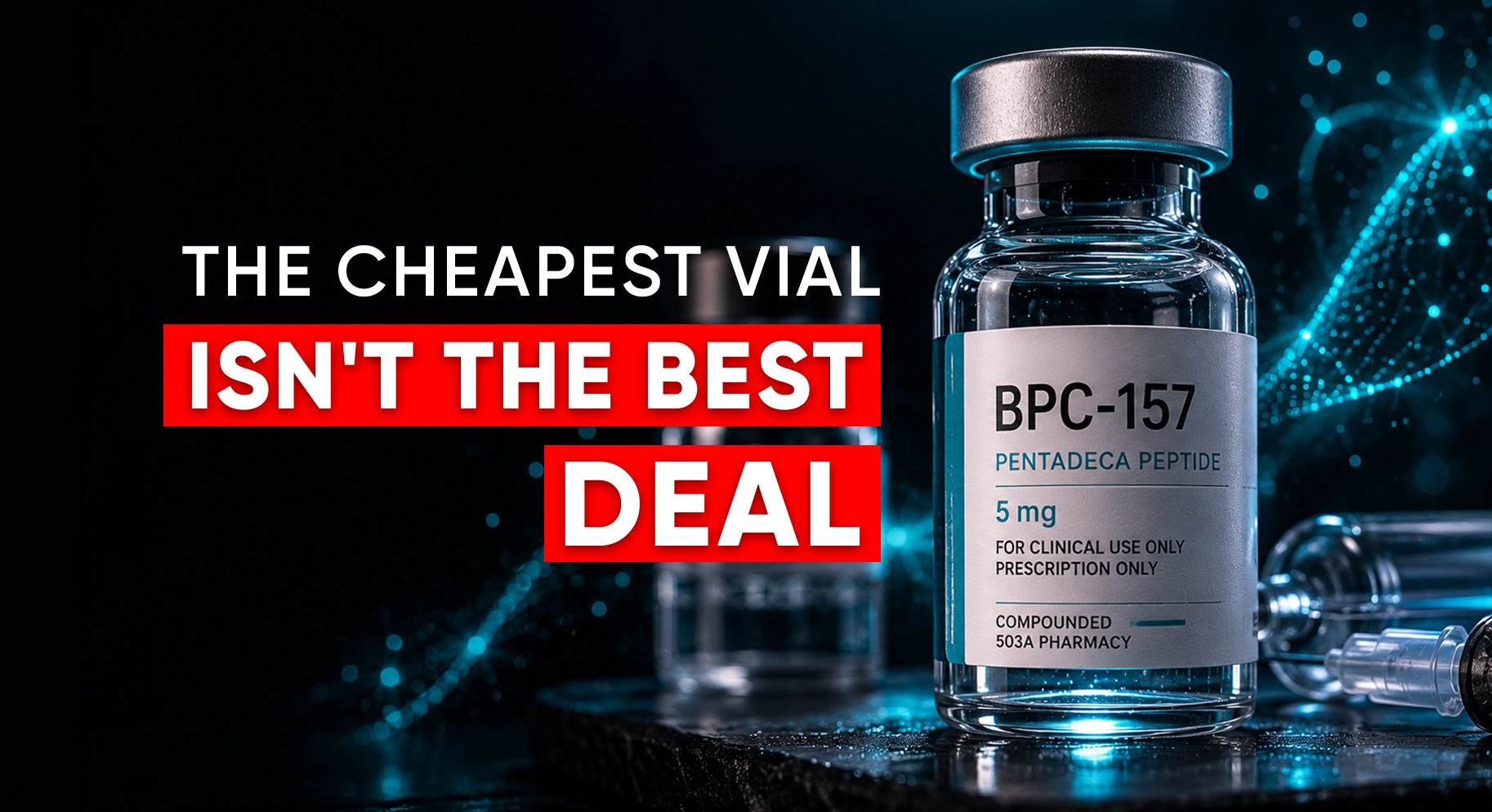
Product Image
What Drives BPC-157 Cost in 2026: Real-World Factors
Beyond vendor markup, the price you see usually reflects several cost drivers:
- Supply chain consistency: stable sourcing and batch handling typically cost more than “inconsistent availability” pricing.
- Testing and quality control: credible third-party testing is not free; it’s labor and overhead.
- Regulatory risk handling: sellers shipping under uncertainty may embed risk costs into pricing.
- Packaging and cold-chain practices: temperature-aware packaging and handling can affect final totals.
- Market demand fluctuations: peptides can experience demand spikes, changing effective pricing quickly.
Pros and Cons of Buying Based on Lowest Price
I’ll be direct: cheapest isn’t always worst, but “lowest price” is often the fastest path to uncertainty. Here’s how I frame it for buyers.
Potential pros
- Lower upfront BPC-157 cost for well-documented products
- Better budget fit if you already have a repeatable sourcing system
Common cons
- Unclear batch identity or documentation limitations
- More variability in what you receive vs. what you expected
- Shipping ambiguity that increases total cost (or risk)
FAQ
Is it legal to buy BPC-157?
It depends on your location. BPC-157 may be regulated differently by country/state, and import or possession may be restricted even if a vendor markets it. Check your local drug/chemical regulations and import rules before purchasing.
Why is BPC-157 cost so different between vendors in 2026?
Pricing differences usually reflect unit conversion differences (mg vs. vial presentation), shipping and handling practices, and how much testing/documentation is provided. Some offers appear cheaper because they externalize risk or reduce transparency.
What should I look for to avoid overpaying or buying the wrong batch?
Normalize prices to cost per mg, confirm vial quantity math, review batch-specific documentation if available, check shipping terms (including packaging/handling), and read return/exchange policies so you can estimate your true landed cost.
Conclusion
In 2026, understanding BPC-157 cost isn’t just about spotting a sale—it’s about normalizing unit pricing, budgeting for shipping and handling, and accounting for the value of batch-level documentation. And because your question “is it legal to buy bpc 157” is jurisdiction-dependent, legality should steer your vendor choice before you commit money.
Next step: Create a simple cost-per-mg comparison spreadsheet for 2–3 vendors using their stated vial quantities and total shipping, then shortlist only those that clearly state documentation and shipping terms in a way you can verify.
Discussion